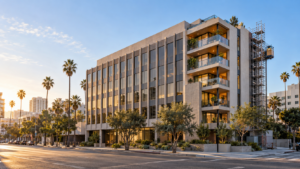
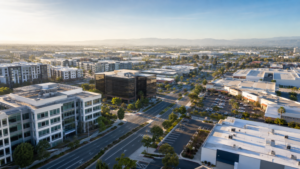
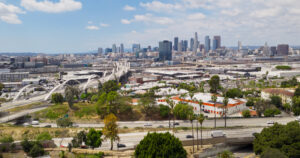
An older office or retail building may have more than one path forward. In February 2026, the City of Los Angeles expanded its adaptive reuse rules, making it easier for certain existing commercial buildings to be considered for conversion to housing. For owners facing vacancy, changing tenant demand, or an upcoming sale, that creates a question worth exploring: Could the property appeal to a buyer with a different use in mind?
The answer depends on the building. A new approval pathway does not make every conversion practical. But it could change how some properties are evaluated, marketed, and priced.
What changed in Los Angeles?
The Citywide Adaptive Reuse Ordinance took effect on February 1, 2026. It provides zoning incentives and a more streamlined review process for eligible buildings that are at least 15 years old. The city says the ordinance is intended to help turn underused commercial space into housing.
That expansion matters because adaptive reuse is no longer a conversation limited to a small group of historic Downtown buildings. Owners of older properties elsewhere in the city may now have reason to examine whether residential conversion is a viable option for their sites. Eligibility still depends on the property and applicable zoning requirements.
A new use can change the buyer conversation
Consider an older office building with persistent vacancy. A buyer intending to keep it as office space will evaluate its likely leasing costs, achievable rent, and time to occupancy. A buyer exploring conversion will ask a different set of questions: Can the floor plan accommodate residential units? Is there enough natural light? What would it cost to complete the conversion?
Those are different investment cases for the same address. The potential for conversion may bring another type of buyer into the conversation, but it does not automatically establish a higher value. The cost and complexity of the work must still make financial sense.
This is where a property’s details become more important than its broad asset class. Building depth, window placement, access, existing systems, and the amount of structural work required can have a significant effect on conversion feasibility. Two nearby buildings of the same age and size may present very different opportunities.
Owners should assess the option before relying on it
For an owner considering a sale, the goal is to understand whether conversion deserves further study and how that possibility might affect the property’s positioning.
An initial review might bring together a broker, architect, land use professional, and contractor to look at the site’s zoning, physical layout, existing tenancy, and a preliminary scope of work. That information can help an owner decide whether to market the property for its current use, explore a broader buyer audience, or pursue more detailed feasibility work.
The same thinking applies to buyers. An attractive acquisition price can lose its appeal if the conversion requires extensive structural changes or the finished units cannot support the total project cost. The ordinance may simplify part of the approval process; it does not replace careful due diligence.
Take a fresh look at your property’s potential
Los Angeles’s updated rules give owners and investors another possibility to consider when a commercial building is no longer meeting its original purpose. The most valuable insight is that a property’s best future use may deserve a fresh look.
If you own an older commercial property in Los Angeles, now may be a good time to reassess its potential. Whether you are considering a sale, exploring a new use, or deciding what to do with vacant space, Peak Commercial can help you evaluate your options and position the property for the right buyers. Contact our team to start the conversation.